How the FIDE Oral Exam Works (A1–B1)
The Swiss FIDE test is a key step for anyone in Switzerland who needs to demonstrate their language proficiency in French, German or Italian. This guide focuses only on the FIDE oral test: what happens in the exam room, what the examiner asks at each level, what a good answer sounds like in French, and practical tips to prepare effectively. Whether you’re taking the exam in Geneva or Vaud, you’ll know exactly what to expect on exam day.
The FIDE oral exam at a glance
The FIDE oral test assesses your language skills in everyday situations and real-life scenarios. Everyone starts with the A2 oral test, then continues to A1 or B1. The speaking section and the listening comprehension section each last approximately 15 to 20 minutes, so plan for about 40 minutes in total. There are always two examiners in the exam room: one speaks with you, and the other takes notes.
A2 oral test
What you doDescribe an image, do a role play, answer 3 follow-up questions
What the examiner wantsStructured sentences; your meaning is clear, even with mistakes
A1 oral test
What you doDescribe 4 pictures, then a simple role play
What the examiner wantsWords and short phrases that get your message across
B1 oral test
What you doChoose a conversation topic, answer 4 questions: experience, process, pros and cons, hypothetical
What the examiner wantsFluent answers with reasons, opinions and connectors
Listening comprehension
What you doListen to audio clips and answer questions
WeightCounts for one third of your oral result
The FIDE test has two parts: an oral part (speaking and listening comprehension) and a written part (reading and writing). Each part spans two language levels, A1–A2 or A2–B1, from A1 to B1 overall. This guide covers the oral part only. For the written test, the level you need for a B permit, C permit or naturalisation, costs and registration, see our FIDE test guide: levels, costs and registration.
If you live in a French-speaking canton, such as Geneva or Vaud, you take the FIDE oral exam in French.
Before the FIDE oral test starts
When you arrive at the examination centre, you’ll be asked for your ID card and basic personal information, such as your phone number and the reason you’re taking the test. In Geneva or Vaud, expect these questions in French.
Then the examiner asks a few general questions about your life. This part of the FIDE oral exam isn’t graded. Typical questions:
- « Depuis combien de temps êtes-vous en Suisse ? » (How long have you been in Switzerland?)
- « Dans quelle commune habitez-vous ? » (What commune do you live in?)
- « Avez-vous des enfants ? Vont-ils à l’école ? » (Do you have children? Do they go to school?)
These questions let the examiner assess your spoken level informally and pick the scenarios most relevant to you. The FIDE test is built on everyday situations in Switzerland, so if you don’t have children, you usually won’t get school-related scenarios.
A2 FIDE oral test: three tasks everyone takes
Regardless of your language proficiency, beginner or fluent, everyone starts with the A2 oral part. The speaking test and listening comprehension are graded together; reading and writing are assessed separately in the written part. The A2 FIDE oral test has three tasks that follow one scenario:
- Task 1: describing an image
- Task 2: role play based on the image
- Task 3: answering follow-up questions
FIDE A2 oral test – Task 1: describing an image
The examiner shows you an image of a situation, for instance a person on the phone holding their arm in pain while a medical assistant in a doctor’s office listens. The examiner introduces the theme (“medical appointments”) and asks:
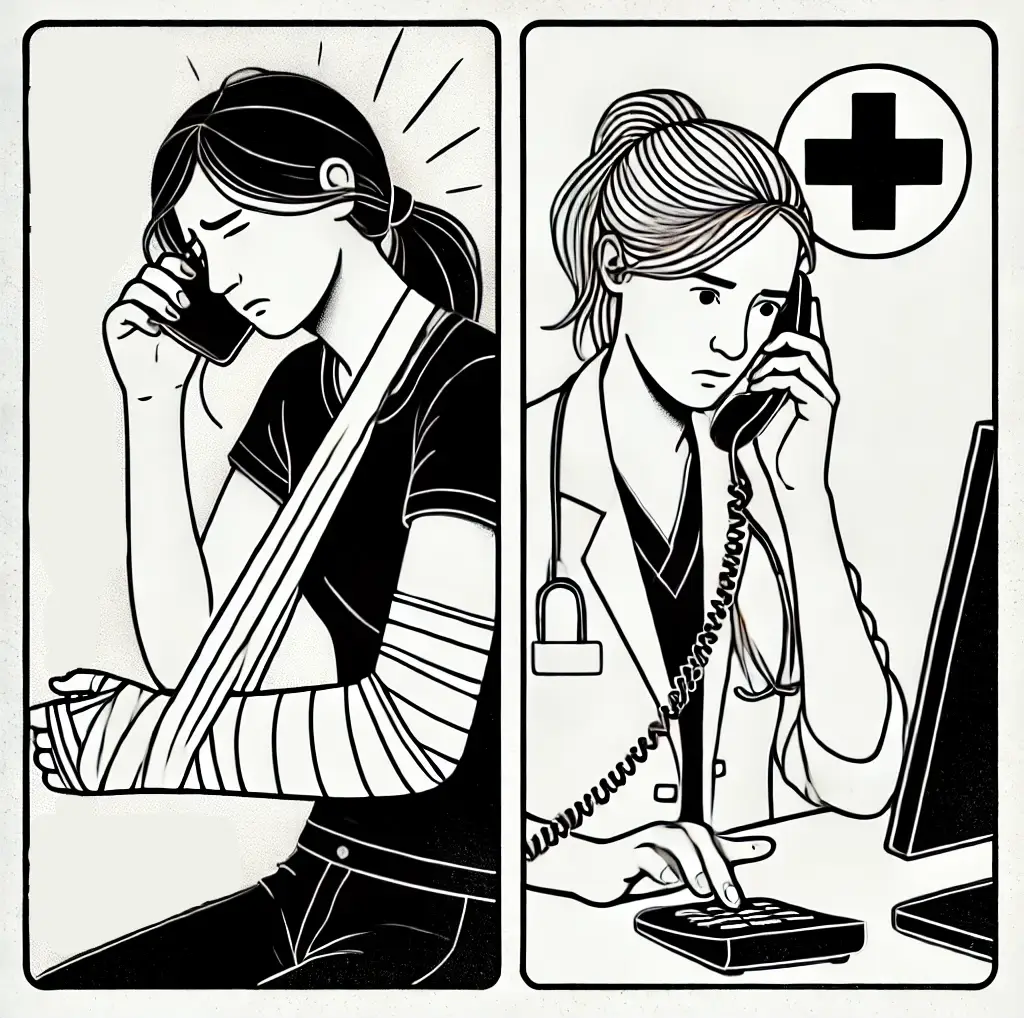
Your answer should cover the situation, possible actions and the emotions of the people in the image. This description should last one to two minutes. A good A2 answer:
Note: To date, the FIDE manual states that the image always shows one person calling another. Even so, prepare for phone and in-person conversations. It helps you combine your preparation for the A1 and B1 parts of the oral test.
To prepare effectively, use the freely accessible FIDE scenarios, the free mock test on the FIDE website, or our own practice materials. Practise describing situations aloud, ideally with someone else, to build your speaking skills and confidence. Write down key phrases that work in several situations:
- « Cette personne appelle XYZ pour les informer qu’elle sera en retard. » (This person is calling XYZ to inform them they will be late.) Useful for a doctor’s office, administration or the bank.
- « Cette personne appelle pour demander plus d’informations sur ABCD. » (This person is calling to request more information about ABCD.)
- « Cette personne pose une question, et l’autre répond. » (This person asks, and the other person answers.) A simple conversation pattern to organise your vocabulary.
These strategies help refine your level to meet the test requirements. If you need to progress from A1 to A2 or B1, though, more intensive self-study or language classes may be necessary.
Try it now: do a free A2 speaking practice paper built on this exact task.
Try a free sample paperFIDE A2 oral test – Task 2: role play
Next, the examiner introduces a role play based on the image from task 1. It tests your ability to converse, understand and answer questions appropriately. For example: “The person in the image hurt their arm while biking and is now calling their doctor. I’ll play the medical assistant, and you’ll play the patient.” You make an appointment, give personal details and, if necessary, negotiate an earlier time slot.
Here’s where it gets fun. The examiner sometimes wants you to really engage in the role play, so don’t be afraid to go all in. You might even start with a cheerful « Dring, dring, dring ! » as if you’re making the call. It’s not just about getting the right words; it’s about making the conversation feel natural.
Example of role play:
The role play lasts a few minutes, and the examiner assesses both your speaking and your comprehension. Note: while this is a speaking test, it’s also a comprehension test. If the examiner asks you questions and you answer something completely different, it shows you haven’t understood, so the conversation isn’t going well.
Focus on common question-and-answer patterns. Many everyday situations involve predictable exchanges:
- « Je voudrais prendre rendez-vous. Y a-t-il des créneaux disponibles ? » (I would like to schedule an appointment. Are there any available times?)
- « J’ai besoin de plus d’informations sur ce service. Pouvez-vous m’expliquer comment cela fonctionne ? » (I need more information about this service. Can you explain how it works?)
- « J’appelle parce que j’ai un problème avec ma carte bancaire. Que dois-je faire ? » (I’m calling because I have a problem with my bank card. What should I do?)
- « Je suis disponible le matin. » / « Je préférerais un horaire après 15 h. » (I’m available in the morning. / I’d prefer a time after 3 p.m.)
FIDE A2 oral test – Task 3: follow-up questions
Task 3 builds on the scenario from tasks 1 and 2. The examiner asks you three questions, which require you to:
- Talk about your habits and preferences: « Qu’est-ce qui est important pour vous quand vous choisissez un médecin ? » (What is important for you when choosing a doctor?)
- Describe an experience: « Avez-vous déjà dû appeler un médecin en urgence ? » (Have you ever had to call a doctor for an emergency?)
- Explain a process: « Que faites-vous si vous vous blessez ? » (What do you do if you get hurt?)
Your answers should be structured but don’t need to be grammatically perfect. The focus is on clear communication and being understood.
- Think ahead about everyday topics like appointments, daily activities or work.
- Give personal answers with a short explanation: « Oui, j’ai déjà appelé un médecin parce que j’avais de la fièvre. » (Yes, I’ve called a doctor before because I had a fever.)
- Prepare for follow-up questions: the examiner may ask « Pourquoi ? » or « Vous avez un exemple ? »
- Avoid one-word responses: even short answers should include a small detail.
- Simulate a conversation with a partner, and record your answers so you can hear where you hesitate.
After the A2 oral test: you choose A1 or B1
After the A2 test, the examiner recommends whether you continue to the A1 or the B1 test. Examiners may guide you, but the decision is yours. The examination centre isn’t allowed to make it for you. We’ve heard of centres requiring candidates to take an in-house (non-FIDE) test and using it to steer the decision. If you want to continue to B1 even though they advise A1, you can. If they really push you towards A1, it may be because your level doesn’t meet the criteria yet, but again, it’s your decision.
A1 FIDE oral test: two simple tasks
The A1 oral part consists of two tasks: describing a sequence of images, then a simple role play. It assesses whether you can communicate and demonstrate basic language skills.
FIDE A1 oral test – Task 1: describing a sequence of images
You see four sequential images showing a simple scenario, such as buying medicine at the pharmacy or going to the market. Describe the people involved, their actions and the overall situation, using simple vocabulary. The examiner expects you to explain what’s happening in the four pictures, not just list objects.
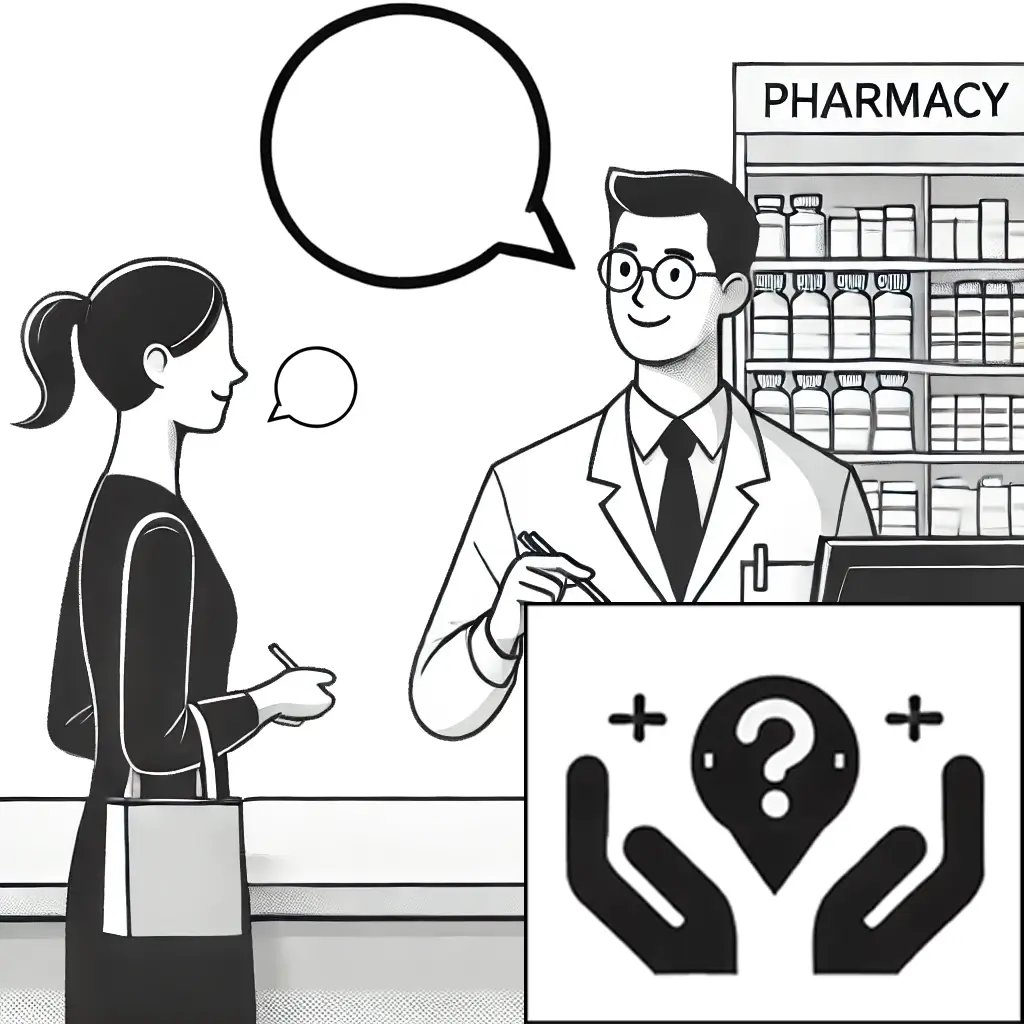
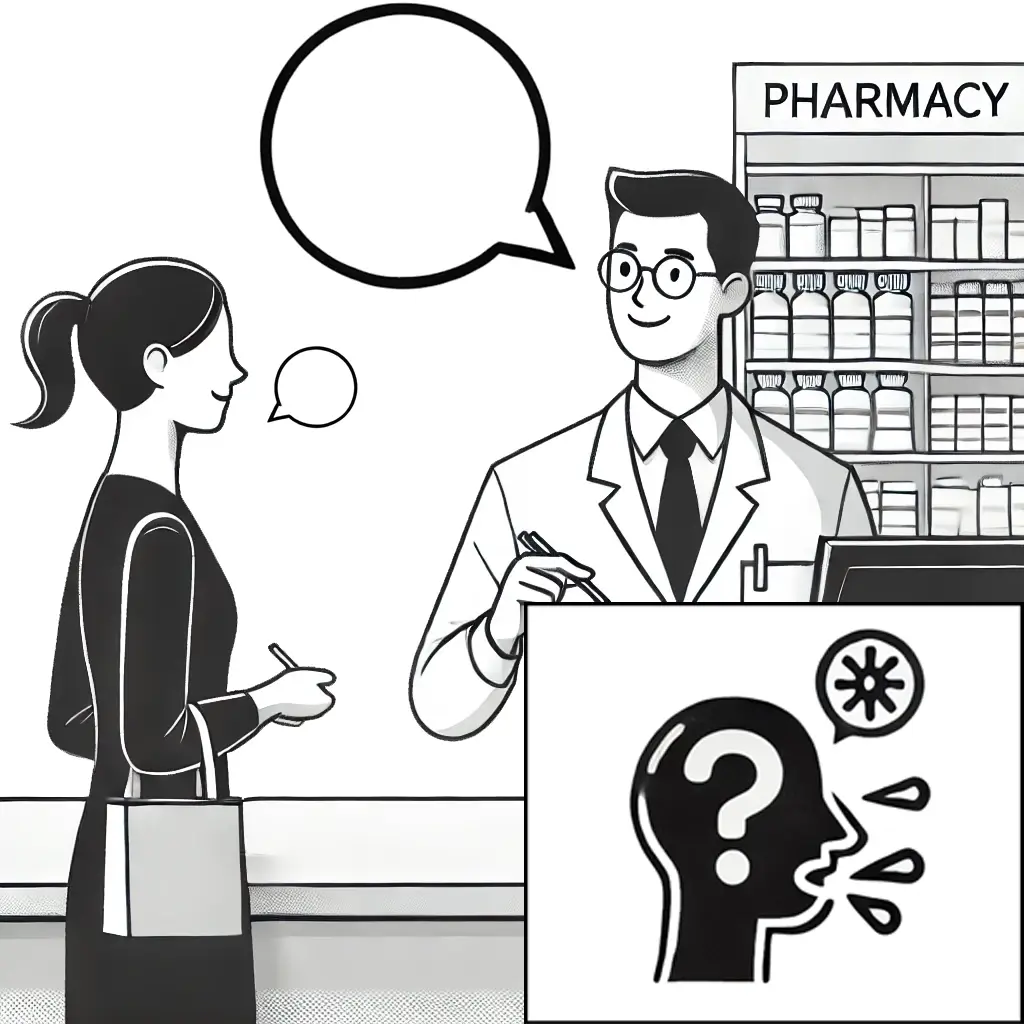
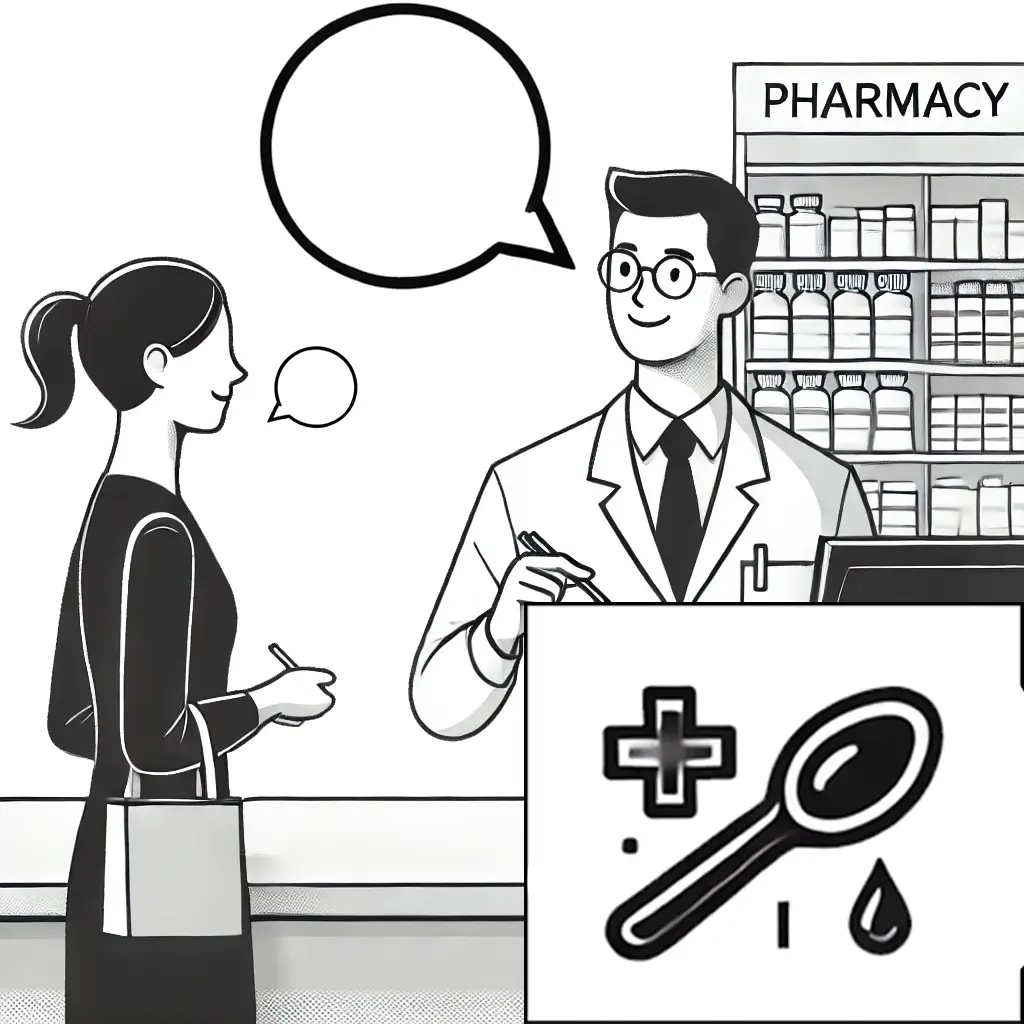
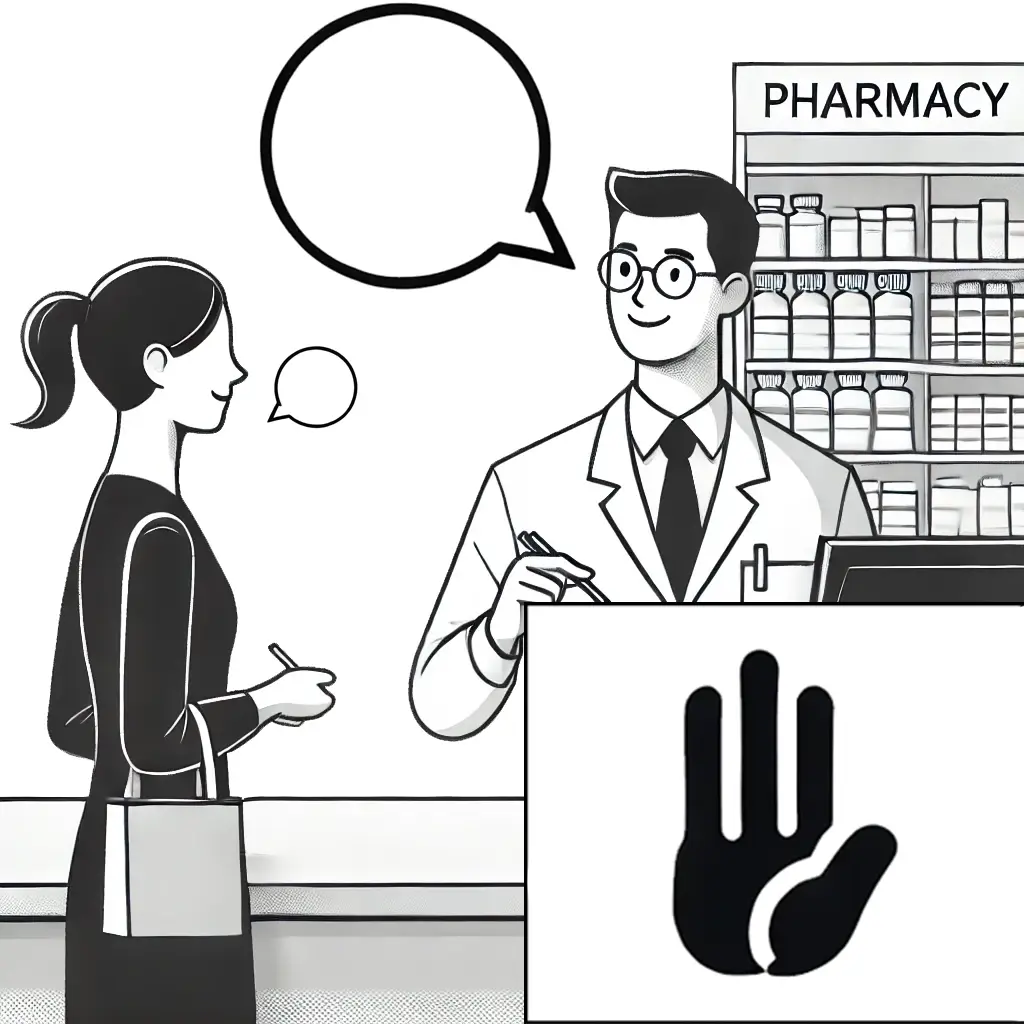
At the A1 oral level, you don’t need complete sentences. Broken sentences, keywords and simple phrases are acceptable as long as the meaning comes across. Here’s the gap between what people think they need and what actually passes:
It looks simple here, but it’s much more daunting at A1 level. The most common mistake we see is describing only what people are wearing, not the situation. That will probably get you the A1, but not the A2. So aim for the A2 criteria: describe the situation first, then add details like clothing or objects in the room.
FIDE A1 oral test – Task 2: simple role play
For this simple role play, the examiner uses the same images, points to each person and asks what they say:

Note: Many students find this part of the oral exam harder than the A2 image description, because they assume they need detailed dialogue. At A1, straightforward answers, incomplete sentences or even one-word responses are acceptable.
B1 FIDE oral test: a real conversation
B1 is the level needed for naturalisation and the early C permit, so it’s where most of the pressure is. The B1 oral test is simple in its conception: the examiner lets you choose between two topics, and you have a structured conversation. The conversation topic can be any category or subcategory of the FIDE scenarios. The discussion includes four questions:
- Describing your experience: « Quelle est votre profession ? Comment l’avez-vous apprise ? » (What is your profession? How did you learn it?)
- Explaining a process: « Avez-vous déjà suivi une formation continue ? Comment ça s’est passé ? » (Have you ever taken a continuing education course? What was your experience like?)
- Discussing pros and cons: « Quels sont les avantages et les inconvénients d’une formation en parallèle du travail ? » (What are the advantages and disadvantages of continuing education while working?)
- Answering a hypothetical question: « Envisageriez-vous de changer de métier ? Pourquoi ? » (Would you consider changing careers? Why or why not?)
What a strong B1 answer sounds like (questions 3 and 4):
What makes it B1:
One evaluation criterion is that you can list the positive and negative sides of a situation, so listen and answer every part of the question. Even « Il n’y a pas d’inconvénients » shows you understood.
The listening comprehension part
The comprehension test usually follows the FIDE oral exam, though some centres schedule it separately. Its level follows the route you chose (A1–A2 or A2–B1). Unlike the speaking section, which involves two examiners, the listening test can be assessed independently.
How the FIDE oral exam is evaluated
At the end of the oral exam, the two examiners confer and agree on a grade, then send it to Bern for final validation. The examination centre knows whether you’ve passed but can’t tell you. Official test results take approximately four weeks. Calling or emailing the examination institution or the State Secretariat for Migration (SEM) won’t speed this up.
The language levels follow the Common European Framework of Reference (CEFR):
You don’t need complete sentences; you answer with a series of sequential but unstructured words. The examiner can make out or guess what you mean.
You form structured sentences. The syntax may be slightly off, but your meaning is clear, and you use the correct vocabulary or find other ways to express yourself.
You produce well-structured sentences. You may still make mistakes in longer sentences, but your vocabulary is solid and your answers are fluid and coherent. The conversation feels natural and interactive, not just linear.
For example answers side by side, see A1 vs A2 vs B1: what examiners expect. The official criteria are in the FIDE evaluation documentation.
How to prepare effectively for the FIDE oral exam
- Official resources
The FIDE secretariat publishes the FIDE scenarios and a free mock test on the FIDE website. There’s only one official model test, so you’ll run out of practice quickly. - Our practice materials
Free FIDE sample papers, with A2 and B1 speaking tasks built on the real format. Three are free, no card needed. - With a teacher
FIDE preparation in Geneva or online, from 360 CHF, with real speaking time and corrections from a trainer.
Whichever route you choose, practise aloud on everyday themes such as health, housing and work, and record yourself so you can hear where you hesitate.
Practical information: costs, results and the language passport
- Costs: CHF 250 for the full FIDE test, CHF 170 if you take only the oral part, CHF 120 for the written part. Fees are the same at every centre.
- Test results: sent by post to the address you give on exam day, usually after about four weeks.
- Language passport: your result is recorded in the FIDE language passport, the official document Swiss authorities accept as proof of language competency for residence permits, the C permit and naturalisation. It shows your oral and written parts separately.
Which level you need for a B permit, C permit or naturalisation, how to register, and how the oral and written parts combine are covered in our FIDE test guide.
FIDE oral exam: common questions
Can I go to B1 if the examiner advises A1?
Yes. The decision is yours, not the centre’s. Some centres may ask you to sign a document confirming you chose B1 against their advice.
Can the examiner repeat a question in the FIDE oral test?
In the speaking section, yes: examiners can repeat or rephrase questions and sometimes clarify a word. In the listening part, each audio is played twice, so ask for the repeat if you need it.
Will grammar mistakes make me fail the FIDE oral exam?
Not on their own. At A1 and A2, the examiner looks at whether your message gets across. Even at B1, mistakes in longer sentences are expected. On exam day, silence costs you far more than mistakes.
What if I know nothing about the topic?
Keep talking to the examiner and bring it back to something you know. A student of ours got a question about football and knew nothing about it. A good answer would have been « Je ne connais pas bien le football, mais j’aime le tennis. Quand je joue avec mes amis… » It shows you understood the question and can hold a conversation.
Want a teacher to get you to your level? FIDE preparation in Geneva or online, from 360 CHF.
Book a free FIDE consultation