My Linguistics Language Learning Method
Bridging classroom learning and real-life use
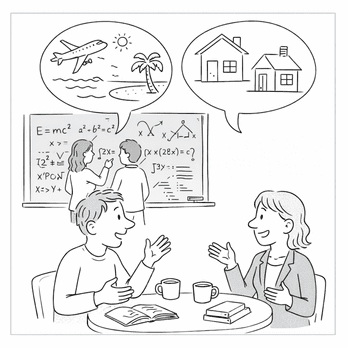
My Linguistics is an interaction-structured speaking-first language learning method designed to help learners use the target language earlier in real situations.
Definition
Definition of the language learning method
My Linguistics uses repetition, interaction, and communicative tasks — elements common across many language teaching methods.
The difference lies in the organisation of the content: carefully selected material guides learners logically through the structure of the language so they progress rather than repeat mechanically.
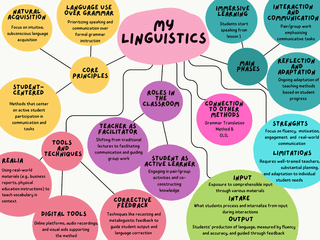
Because learners encounter similar difficulties at predictable stages, the method anticipates these points and makes them easier to understand and use. This organisation helps learners move from recognition to production while building a solid foundation for second language acquisition.
Who it’s for
Learners from age 12 onwards, across all education backgrounds and nationalities.
Best fit
Those who prefer using language over analysing rules — including adults who need language for real situations.
What makes the Method structurally different
Applied linguistics
The difference lies in instructional structure — in this method, language input, interaction, repetition, and variation are organised as a logical progression so learners move from guided exchange toward flexible communication.
The focus is not repetition alone but progression through meaningful communication, where language reappears, expands, and transfers to new situations.
Interaction-first classroom
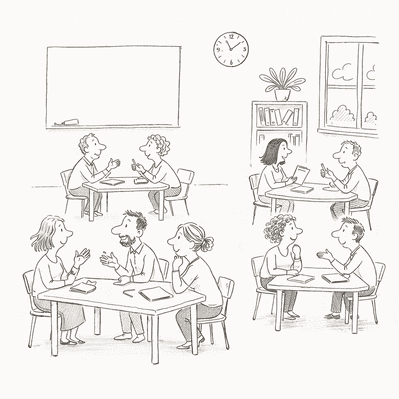
Every learner speaks repeatedly, not occasionally.
Progressive language design
Language reappears and builds instead of appearing once.
Grammar through use
Patterns are experienced before explanation.
Listening before explanation
Recognition reduces hesitation.
Short practice cycles
Hear > use > repeat > vary.
Task-based communication
Conversation simulates real language use.
Immediate application
Language is applied through guided interaction from the start.
Anxiety-aware environment
Mistakes are expected and participation is normal.
Closing the gap
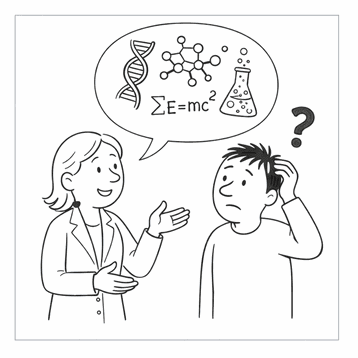
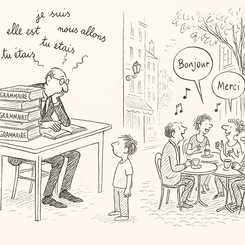
Closing the gap between learning and using a language
Many language learners struggle to use the language they study when it matters. They understand explanations, recognise vocabulary, and complete exercises — yet hesitate in real conversations.
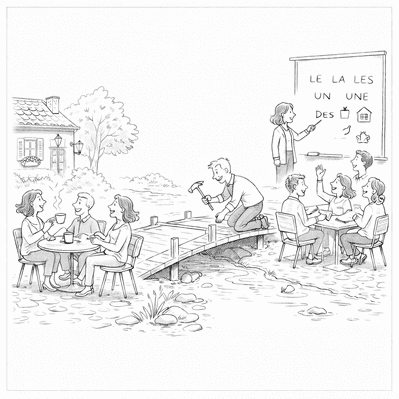
The method addresses this gap by organising learning around active use. Listening supports recognition, interaction stabilises what learners can say, and reading and writing reinforce language that learners already use. Lessons maximise engagement through pair work, audio interaction, and immediate reuse of language.
Through structured communicative tasks, learners typically experience observable changes in how they use the language. Listening recognition improves, participation increases, patterns become easier to notice, and confidence grows when communicating with native speakers. Learners also develop strategies to recover when communication breaks down.
Because language is organised around communicative outcomes, learners repeatedly practise situations they are likely to encounter — including everyday interaction, service exchanges, workplace conversations, administrative communication, and professional contexts such as job interviews.
What changed: From practice to real-life transfer
Earlier pair-interaction approaches increased participation, but transfer to real situations was uneven.
Learners could perform guided exchanges, yet hesitate in unpredictable conversations.
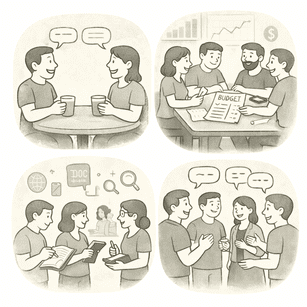
The redesign focused on transfer:
Research
Research foundations
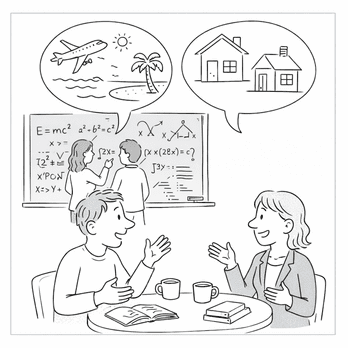
The method builds on research developed in Geneva within the field of language education at the Centre Européen pour l’Evaluation Linguistique (CEEL), particularly Self-Access Pair Learning (SAPL), a classroom-interaction framework that reorganised lessons around pair work to increase active language use.
This work aligns with findings from second language acquisition, showing that repeated, meaningful interaction supports development. It places the approach within the broader tradition of communicative language teaching and interaction-based second language acquisition research.
The My Linguistics Method keeps the core idea — learning happens through use — and extends it to strengthen transfer to real-life communication.
How learning happens: The interaction cycle
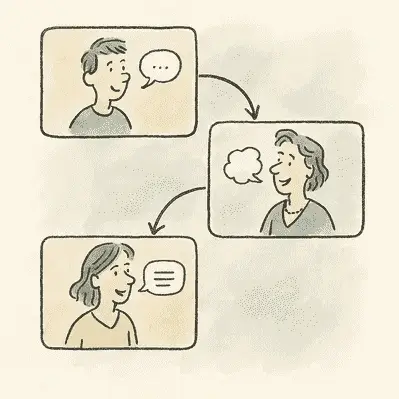
Learning follows a repeated cycle:
Hear language in context
Use it in guided interaction
Repeat across tasks
Vary in new situations
Interact again
Language structures appear early, language acquisition occurs, and progressive mastery develops gradually.
Progress means increasing stability and flexibility — not immediate correctness.
Sample materials
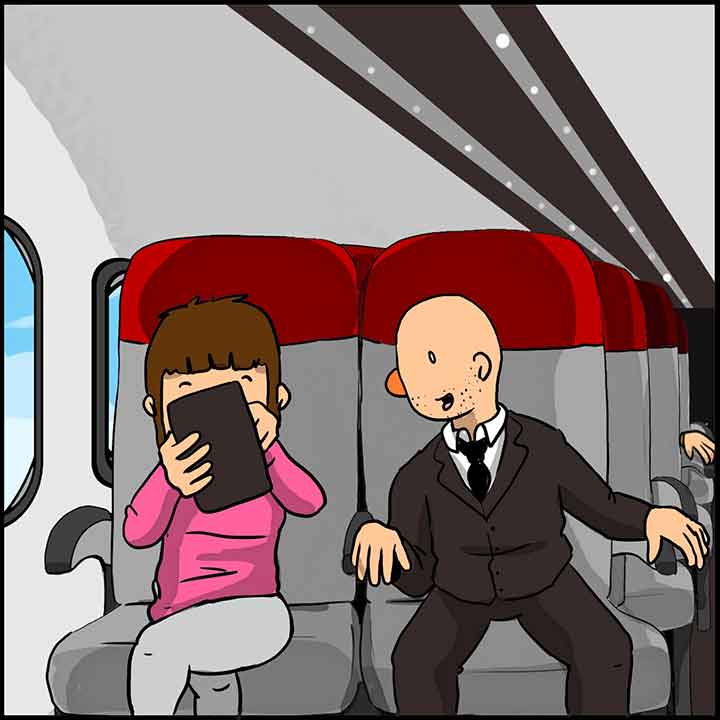
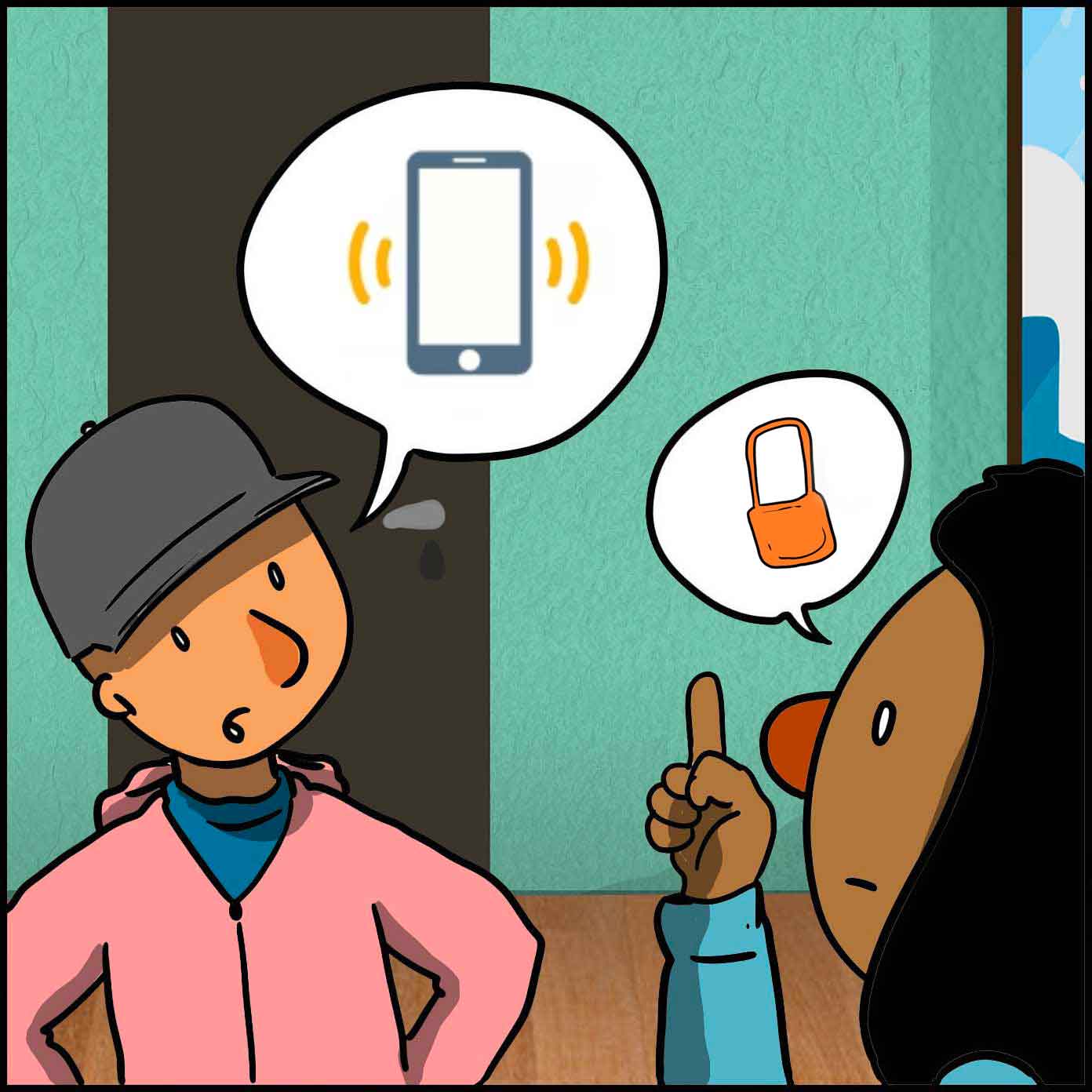
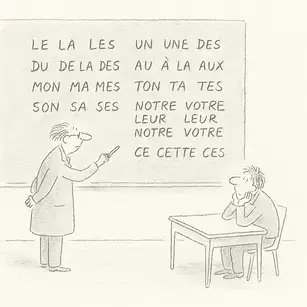
A1 exercises aimed at helping people discuss positional vocabulary.
Listening comes first
Carefully selected listening determines the quality of input learners receive and what they can later produce.
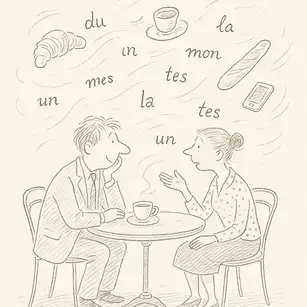
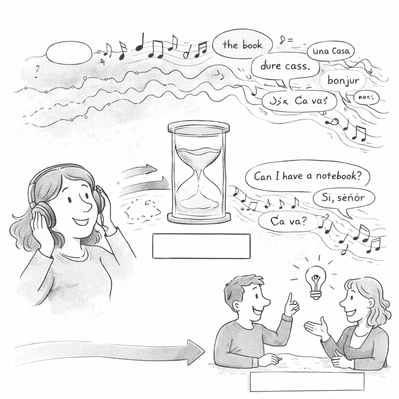
Many speaking difficulties are perception difficulties, particularly in foreign language learning, where learners may recognise less than they expect. For many learners, multiple words can sound like a single continuous sound, and without sufficient exposure to specific speech patterns, language may merge into an undifferentiated stream.
Learners often experience a noticeable shift in listening comprehension around the first 40 hours, which typically precedes speaking confidence and helps build a solid foundation for later speaking development.
This shift makes conversation easier, supports spoken language development, and allows learners to respond more naturally.
progression
Language learning progression
The language learning method supports learners across beginner, intermediate, and advanced levels within second language teaching. Progression is supported through outcome-based units and systematic recycling of language across tasks. Learners revisit structures in new situations, allowing recognition, production, and variation to develop gradually rather than in isolated stages.
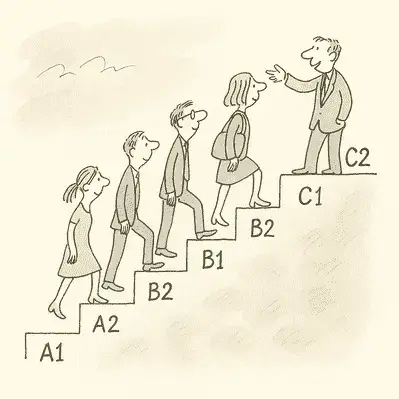
Progress becomes visible through changes in use. Learners typically speak more frequently within each lesson, access previously introduced language more easily, manage longer exchanges, rely less on translation, and show improved listening recognition before speaking stability.
Role of the language teacher
What language learners develop
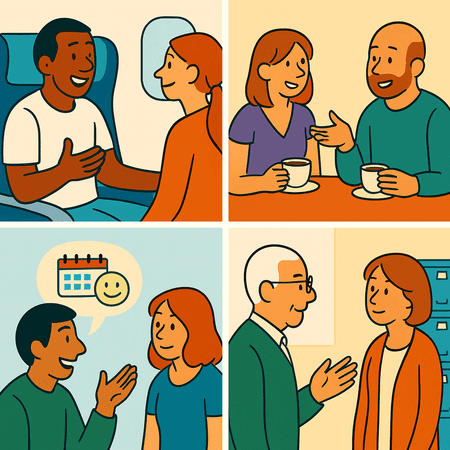
Because the method focuses on interaction and progressive reuse of language, it supports transfer across everyday, professional, and administrative contexts. Specific situations vary according to learner needs while the underlying structure remains constant.
Learners typically develop:
Continuity beyond the beginner stage
Advanced levels
The same structure continues at higher levels, supporting intermediate and advanced learners. Interaction expands toward longer exchanges, more complex listening, interpretation, and professional communication, while reading, writing, and analysis increase to support precision and advanced expression.
This continuity helps reduce the common B1 plateau by allowing learners to refine flexibility, accuracy, and professional language use over time.
At advanced levels, formats expand to support sustained development, including advanced conversation sessions, listening and discourse work with authentic texts, sector-specific communication modules, and guided interaction focused on precision and grammatical control. These formats allow language acquisition to continue beyond the intermediate stage while maintaining meaningful communication.
Rethinking the language classroom
Classroom settings
Continuous method development
The method evolves through classroom observation, learner feedback, and research. Adjustments range from small sequencing changes to new task formats. Development is continuous rather than fixed.
Classroom observation
Real-world feedback shapes each iteration
Ongoing research
Applied linguistics informs sequencing decisions
Further Exploration of the Method
Related articles: