Language Levels A1–B2: Structured Progression in Geneva
Language Levels
Structured language progression from A1 to B2, designed for adults who want clear milestones and measurable speaking progress aligned with CEFR descriptors and adult communicative outcomes.
How to read this progression
These stages describe communicative development and do not correspond to a fixed timeframe or formal Common European Framework of Reference for Languages (CEFR).
Understanding Your Starting Point
How placement supports progress
Every learner begins at a different level. Our placement process identifies your current speaking and structural fluency so we can position you accurately within our A1–B2 progression pathway.
That allows us to place you within a communicative, task-based learning pathway informed by established adult language-learning principles. Meaningful communicative progress typically becomes visible after a sustained cycle of guided practice rather than after isolated lessons.
What you can do at each stage
How we align levels with the Common European Framework of Reference for Languages
Many learners continue through advanced conversation courses, professional communication modules, or sector-specific training, supporting continued progression beyond B2.
What progress looks like in practice
After one learning cycle, many learners observe that they can:
- Participate in short real-life conversations without relying on scripts
- Handle everyday administrative interactions more independently
- Maintain short professional exchanges with greater confidence
- Understand the main ideas of naturally spoken language
Progress is assessed through observable communicative tasks rather than isolated grammar knowledge.

Example outcomes after one learning cycle
After one structured learning cycle (around 40 hours), learners typically demonstrate observable changes in how they use the language in real situations. Examples include learners moving from short scripted exchanges to initiating simple conversations, or from avoiding phone calls to managing brief administrative calls independently.
Many learners are able to:
Typical shifts often include:
How progress develops over time
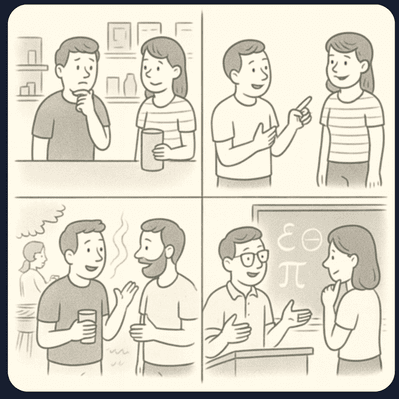
– At earlier stages, development focuses on building and automating core vocabulary, developing an intuitive grasp of sentence patterns, and sustaining simple interactions with less effort and hesitation.
– Once this initial acquisition phase stabilizes, the focus shifts toward expanding expressive range, increasing structural precision, and engaging in more sustained and meaningful conversations.
– Across learning cycles, learners typically experience faster language retrieval, smoother spoken production, and more stable listening comprehension as familiar structures and vocabulary become accessible in real-time communication.
These changes reflect gradual communicative development across multiple learning cycles.
Why this progression works
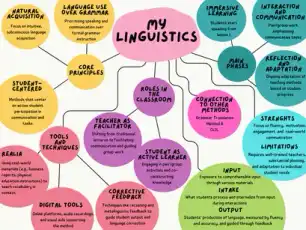
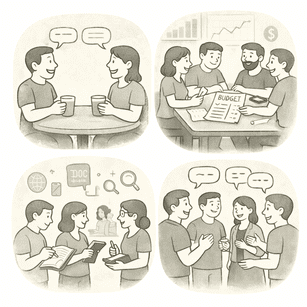
This progression draws on communicative language teaching, task-based learning, and research on interaction, spaced repetition, and adult second-language acquisition.
Instruction prioritizes guided speaking, feedback, and repeated communicative tasks to support long-term retention.
The placement session allows you to see this progression applied to your own starting point.
This session shows how the progression applies to your current communicative ability and what the next realistic step looks like.
Find your perfect fit with My Linguistics
FAQs